IA et Données 2
Machine Learning and Data Sciences 2
Description: The objective of this course is to provide students with the mathematical methods and tools necessary for exploring, analyzing, and interpreting data in the fields of science and physical engineering. The course presents an overview of classical and advanced statistical techniques, such as principal component analysis (PCA) and orthogonal mode decomposition, with an emphasis on their mathematical formulation and numerical implementation. These approaches enable the identification of underlying structures in data and the efficient synthesis of information for the analysis of complex systems.
The course also covers complementary topics such as spectral analysis, sparse representations, and mathematical model reduction, which are essential for modeling and simulating physical phenomena. Through applied examples and practical exercises, students will learn to combine these methods to process real datasets, optimize models, and extract actionable insights, while developing a critical understanding of the assumptions and limitations inherent in each technique.
Bibliography:
- Ref. [1] : Brunton-Kutz : L. Brunton, J. N. Kutz, Data-Driven Science and Engineering: Machine Learning, Dynamical Systems, and Control, Cambridge University Press (2022)
Learning outcomes: AA1: Apply statistical and mathematical methods to explore and analyze scientific and engineering data – AA2: Implement dimensionality reduction techniques for efficient data representation – AA3: Develop and apply data-driven models for identification and control of complex nonlinear systems – AA4: Use spectral, sparse, and model reduction techniques to extract patterns and simplify complex systems.
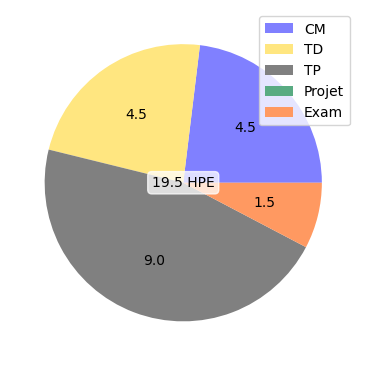
Evaluation methods: Written test, 1h30
Evaluated skills:
- Physical Modeling
- Data Processing
Course supervisor:
- Mehdi Adrien Ayouz
Geode ID: SPM-INF-026