Nanotechnologies
Introduction to Nanotechnologies
Description: The properties of a material at the macroscopic scale are generally determined by its chemical composition and atomic structure. However, this rule no longer applies to objects of nanometric size, whose physical, chemical, and functional properties also depend on their size, shape, and environment. This specificity opens the door to numerous innovative applications. The objective of this course is to introduce students to the fundamentals of nanoscience and nanotechnology, highlighting the key concepts that distinguish nanoscale systems from conventional materials and devices.
The course covers both nanomaterials and nanotechnologies in a broader sense, addressing surface properties, nanostructuring methods, as well as the principles of design and fabrication of nanoscale devices. It also deals with fundamental questions related to the existence and behavior of nano-objects, such as their structure, morphology, and stability. Through selected examples, various properties of nanoscale systems are examined, including optical, electronic, transport, magnetic, chemical, thermodynamic, mechanical, and biological aspects. Overall, the course provides students with a comprehensive view of nanotechnologies and their potential applications across a wide range of scientific and industrial fields.
Bibliography:
- Ref. [1] : S.M. Linsay, Introduction to Nanosciences, Oxford University Press (2008)
- Ref. [2] : C. Binns, Introduction to Nanoscience and Nanotechnology, Wiley-VCH, 2nd Ed. (2021)
Learning outcomes: AA1: Explain the fundamental concepts of nanotechnology, including nanometric scales, quantum size effects, and the unique properties of nanomaterials – AA2: Understand nanoscale components and devices, as well as their optical, mechanical, and electronic operation – AA3: Identify different growth and nanostructuring techniques – AA4: Apply acquired knowledge to analyze and solve complex problems related to nanotechnology.
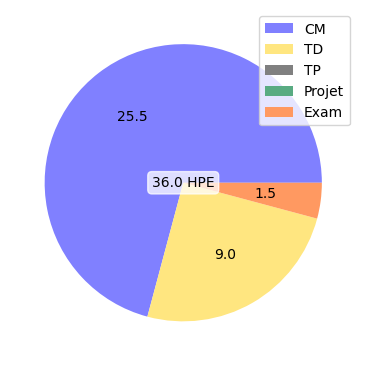
Evaluation methods: Written test, 1h30
Evaluated skills:
- Physical Engineering Design
- Physical Modeling
- Systems Analysis
Course supervisor: Jean-Paul Salvestrini
Geode ID: SPM-PHY-018